Buy horseequipment.eu ?
We are moving the project
horseequipment.eu .
Are you interested in purchasing the domain
horseequipment.eu ?
domain@kv-gmbh.de · 0541-91531010
Buy horseequipment.eu ?
Is the letter S point-symmetric?
No, the letter S is not point-symmetric. Point symmetry occurs when a figure is symmetrical with respect to a single point, meaning that if you were to fold the figure in half over that point, the two halves would perfectly overlap. However, the letter S does not have this property, as it cannot be folded in half to create overlapping halves. Therefore, the letter S is not point-symmetric. **
What is the smallest degree polynomial function that has a graph that is symmetric to the origin and has a saddle point at the point s=11?
The smallest degree polynomial function that has a graph symmetric to the origin and has a saddle point at the point s=11 is a cubic function. A cubic function has odd degree, which allows it to be symmetric to the origin, and it can have a saddle point at s=11. The general form of a cubic function is f(x) = ax^3 + bx^2 + cx + d, where a, b, c, and d are constants. By appropriately choosing the values of these constants, we can create a cubic function that meets the given criteria. **
Similar search terms for What-s-the-Point
Top-Angebote
Products related to What-s-the-Point:
-
essence WHAT THE FAKE! nail glueessence WHAT THE FAKE!, 3x2 g, Gel and Acrylic Nails for Women, Expand your range of manicure options and make your nails look perfect. The essence WHAT THE FAKE! will help you get a professional-looking manicure in the comfort of your own home – it will take your regular routine to the next level, acting as a perfect complement to the tools and beauty products you already use. It will ensure that your nails are always perfectly shaped and well-groomed, making your hands look all the more beautiful. The set contains: essence WHAT THE FAKE! nail glue mini 2 g Ingredients: vegan product no alcohol no perfume oil-free How to use: Follow the instructions for use.2,21 £*Shipping: 3,99 £Secure redirect to the provider
-
Taylor s Eye Witness Spear Point Pocket KnifeCrafted by hand in Sheffield, the Taylor's Eye Witness Spear Point Pocket Knife showcases over 150 years of British knife-making expertise. Combining traditional styling with practical everyday functionality, this classic pocket knife is designed to deliver reliable performance for a wide variety of cutting tasks. The 6.2cm Spear Point blade is made from 420H stainless steel, providing excellent corrosion resistance, durability and long-lasting sharpness. The versatile spear point profile offers precise control, making it suitable for general utility work, outdoor use and everyday carry. Featuring a textured resin handle, this pocket knife provides a comfortable and secure grip while maintaining the timeless appearance associated with traditional Sheffield-made knives. Its balanced design sits comfortably in the hand and slips easily into a pocket when not in use. Manufactured entirely by hand in the Taylor's Eye Witness Sheffield factory, every pocket knife is produced with exceptional attention to detail and quality. Backed by a manufacturer's lifetime guarantee, this Spear Point Pocket Knife is built to provide dependable service for years to come. Knives are not for sale to persons under the age of 18. - all knives and bladed products are delivered by Age Verified Delivery (AVD). The carrier may request proof of age in order to deliver your parcel. If proof of age is not available, or the recipient is underage, the carrier will refuse to deliver.27,90 £*Shipping: 3,50 £Secure redirect to the provider
-
Taylor s Eye Witness Clip Point Pocket KnifeCombining traditional Sheffield craftsmanship with practical everyday performance, the Taylor's Eye Witness Clip Point Pocket Knife is a versatile folding knife designed for those who appreciate quality and reliability. Handmade in Sheffield, it reflects over 150 years of knife-making expertise and attention to detail. The 5.7cm Clip Point blade is crafted from 420H stainless steel, offering excellent corrosion resistance, durability and long-lasting sharpness. The versatile Clip Point profile provides precise control and is well suited to a wide range of everyday cutting tasks, from outdoor use to general utility work. Built with the quality expected from Taylor's Eye Witness, this pocket knife balances traditional styling with dependable performance. Its compact folding design makes it easy to carry, while the robust stainless steel blade ensures reliable cutting capability whenever it is needed. Each knife is manufactured entirely by hand in the Taylor's Eye Witness Sheffield factory, continuing a proud heritage of British knife making. Supplied with a manufacturer's lifetime guarantee, this Clip Point Pocket Knife is designed to provide years of dependable service. Knives are not for sale to persons under the age of 18. - all knives and bladed products are delivered by Age Verified Delivery (AVD). The carrier may request proof of age in order to deliver your parcel. If proof of age is not available, or the recipient is underage, the carrier will refuse to deliver.27,00 £*Shipping: 3,50 £Secure redirect to the provider




-
What is the sign change criterion for a minimum point, maximum point, or saddle point?
The sign change criterion for a minimum point is that the second derivative is positive, indicating that the function is concave up at that point. For a maximum point, the sign change criterion is that the second derivative is negative, indicating that the function is concave down at that point. A saddle point occurs when the second derivative changes sign, meaning the function is concave up in one direction and concave down in another. **
-
Is the letter S symmetric with respect to a point?
No, the letter S is not symmetric with respect to a point. Symmetry with respect to a point means that if you fold the object along that point, the two halves will perfectly overlap. However, if you try to fold the letter S along any point, the two halves will not match up perfectly. **
-
Is every turning point a saddle point?
No, not every turning point is a saddle point. A turning point is a point on a curve where the derivative is zero, indicating a local maximum, minimum, or point of inflection. A saddle point, on the other hand, is a point where the surface curves up in one direction and down in another, resembling the shape of a saddle. While a saddle point can be a turning point, not all turning points exhibit the characteristics of a saddle point. **
-
Is every saddle point a turning point?
No, not every saddle point is a turning point. A saddle point is a point on a surface where the surface curves up in one direction and curves down in another direction. This means that at a saddle point, the surface does not have a local maximum or minimum, so it is not considered a turning point. Turning points occur at local maximums or minimums, where the derivative of the function is zero. Therefore, while a saddle point is a critical point, it is not necessarily a turning point. **

What is the difference between a turning point and a saddle point?
A turning point is a point on a curve where the derivative changes sign, indicating a change in the direction of the curve. This can be a maximum or minimum point. A saddle point, on the other hand, is a point on a surface where the surface curves upwards in some directions and downwards in others, resembling the shape of a saddle. Saddle points are not necessarily extreme points like turning points, but they are critical points where the derivative is zero in all directions. **
What is the difference between a saddle point and a turning point?
A saddle point is a point on a curve where the curve changes direction but does not reach a maximum or minimum value. It is a point of inflection where the curve transitions from being concave upwards to concave downwards, or vice versa. On the other hand, a turning point is a point on a curve where the curve reaches a maximum or minimum value, indicating a change in the direction of the curve. Turning points are also known as local extrema. **
Top-Angebote
Products related to What-s-the-Point:
-
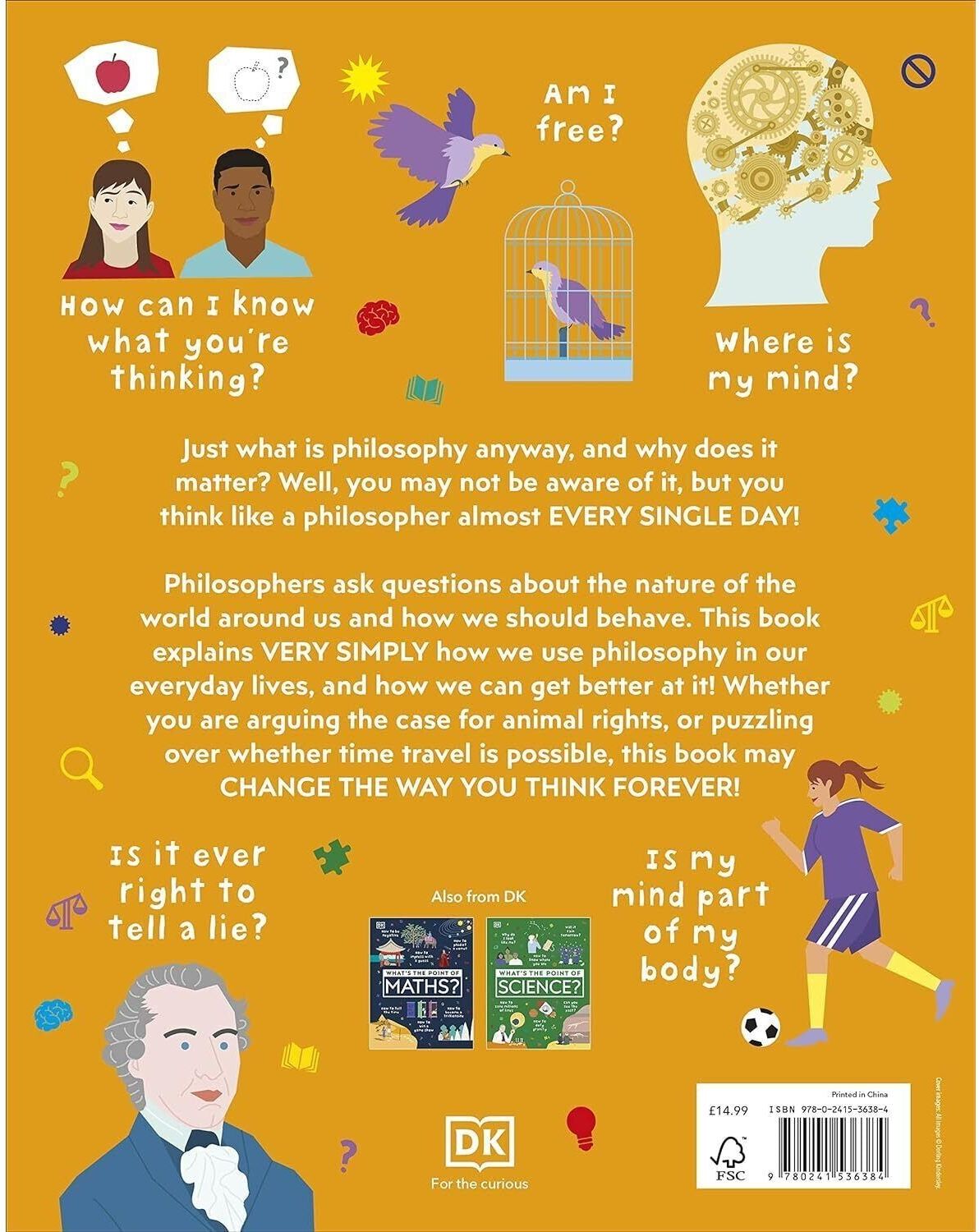
What's the Point of Philosophy? (DK What's the Point of?)Travel down the road of wisdom to discover how to think about a series of philosophical problems, how to defend your opinions on them, and how to evaluate the opinions of others. Why is philosophy important? What's so great about it? Take a leap into the world of philosophy and discover questions about life, the universe, and human behaviour that great thinkers have pondered throughout history, and which are still being asked today. Philosophical ideas affect our day-to-day lives in ways that you might not expect. But understanding these ideas can be daunting - even for adults! If you want to learn how to argue the case for animal rights, why the concept of equality has many sides, or even what the theories are about why humans exist at all, What's the Point of Philosophy? is the perfect place to start. Put your thinking cap on and get ready to explore:- A variety of fascinating topics reveal pivotal questions in philosophy that are still discussed today. - Timeline spreads illustrate major schools of thought, and the women and men who developed them. - Clear, accessible text makes the book appealing for readers of all ages. - Uncoated paper gives a vintage feel to the book which perfectly complements the illustrator's style. This fascinating philosophy book is a unique way to get kids to begin thinking critically about the world around them, and showcases the many ways in which philosophy has changed the world, one crazy idea at a time, and it is guaranteed to inspire, surprise, amuse, and entertain everybody who picks it up. By slowly unraveling arguments to unpack complex theories, What's the Point of Philosophy? allows you to connect with ideas in a new and exciting way. If you never stop asking 'why?', this is the book for you9,99 £*Shipping: 2,99 £Secure redirect to the provider
-
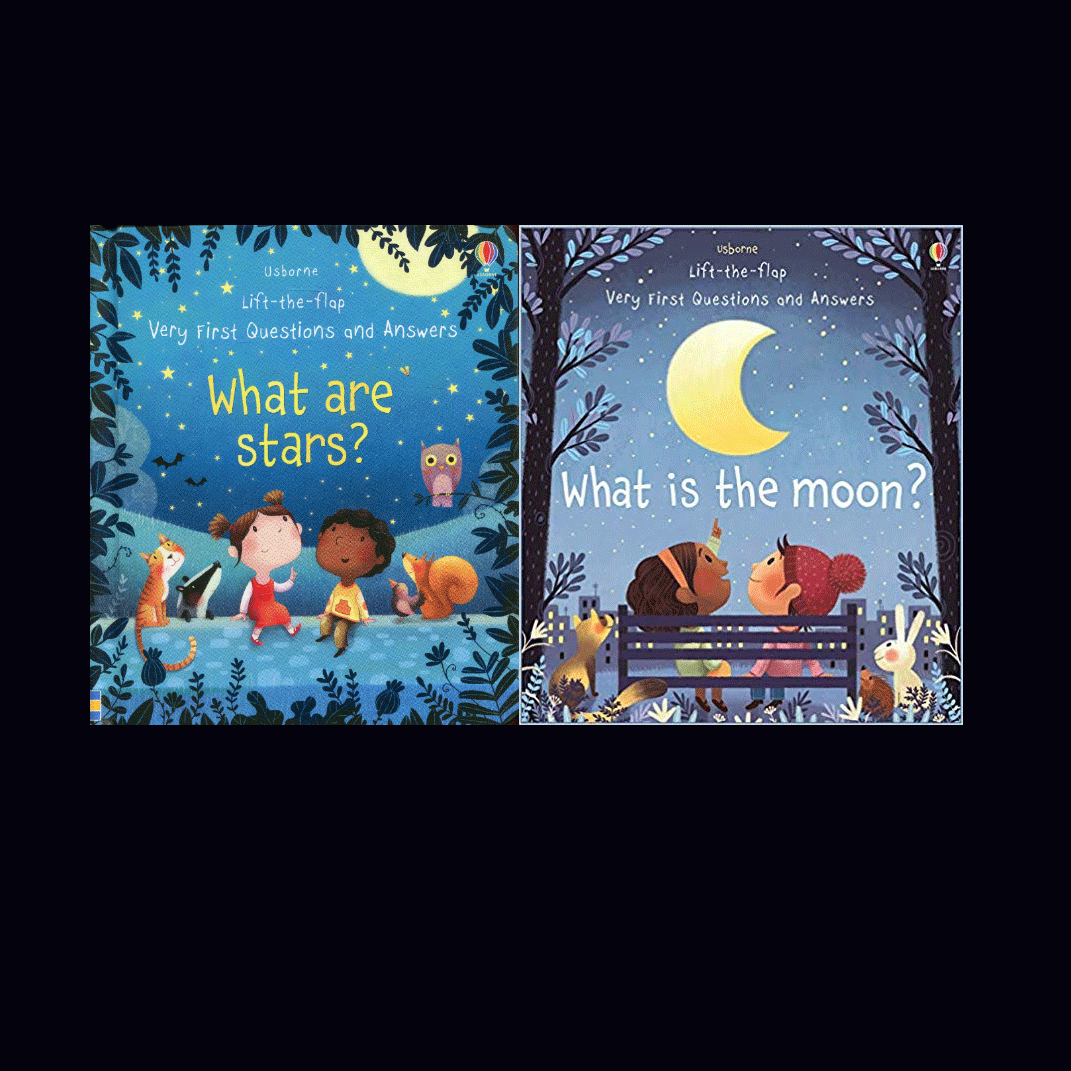
Usborne Lift-the-Flap Space Books – What Are Stars? & What Is the Moon? 2 Book SetTitles in this set: What is the Moon? What are Stars? They twinkle when it's dark outside, but what are stars? it changes shape and shines above our heads, but what is the moon? let's blast off into the night sky to take a closer look with these two wonderful books.8,99 £*Shipping: 2,99 £Secure redirect to the provider
-
essence WHAT THE FAKE! nail glueessence WHAT THE FAKE!, 3x2 g, Gel and Acrylic Nails for Women, Expand your range of manicure options and make your nails look perfect. The essence WHAT THE FAKE! will help you get a professional-looking manicure in the comfort of your own home – it will take your regular routine to the next level, acting as a perfect complement to the tools and beauty products you already use. It will ensure that your nails are always perfectly shaped and well-groomed, making your hands look all the more beautiful. The set contains: essence WHAT THE FAKE! nail glue mini 2 g Ingredients: vegan product no alcohol no perfume oil-free How to use: Follow the instructions for use.2,21 £*Shipping: 3,99 £Secure redirect to the provider
-
Is the letter S point-symmetric?
No, the letter S is not point-symmetric. Point symmetry occurs when a figure is symmetrical with respect to a single point, meaning that if you were to fold the figure in half over that point, the two halves would perfectly overlap. However, the letter S does not have this property, as it cannot be folded in half to create overlapping halves. Therefore, the letter S is not point-symmetric. **
-
What is the smallest degree polynomial function that has a graph that is symmetric to the origin and has a saddle point at the point s=11?
The smallest degree polynomial function that has a graph symmetric to the origin and has a saddle point at the point s=11 is a cubic function. A cubic function has odd degree, which allows it to be symmetric to the origin, and it can have a saddle point at s=11. The general form of a cubic function is f(x) = ax^3 + bx^2 + cx + d, where a, b, c, and d are constants. By appropriately choosing the values of these constants, we can create a cubic function that meets the given criteria. **
-
What is the sign change criterion for a minimum point, maximum point, or saddle point?
The sign change criterion for a minimum point is that the second derivative is positive, indicating that the function is concave up at that point. For a maximum point, the sign change criterion is that the second derivative is negative, indicating that the function is concave down at that point. A saddle point occurs when the second derivative changes sign, meaning the function is concave up in one direction and concave down in another. **
-
Is the letter S symmetric with respect to a point?
No, the letter S is not symmetric with respect to a point. Symmetry with respect to a point means that if you fold the object along that point, the two halves will perfectly overlap. However, if you try to fold the letter S along any point, the two halves will not match up perfectly. **
Similar search terms for What-s-the-Point
-
Taylor s Eye Witness Spear Point Pocket KnifeCrafted by hand in Sheffield, the Taylor's Eye Witness Spear Point Pocket Knife showcases over 150 years of British knife-making expertise. Combining traditional styling with practical everyday functionality, this classic pocket knife is designed to deliver reliable performance for a wide variety of cutting tasks. The 6.2cm Spear Point blade is made from 420H stainless steel, providing excellent corrosion resistance, durability and long-lasting sharpness. The versatile spear point profile offers precise control, making it suitable for general utility work, outdoor use and everyday carry. Featuring a textured resin handle, this pocket knife provides a comfortable and secure grip while maintaining the timeless appearance associated with traditional Sheffield-made knives. Its balanced design sits comfortably in the hand and slips easily into a pocket when not in use. Manufactured entirely by hand in the Taylor's Eye Witness Sheffield factory, every pocket knife is produced with exceptional attention to detail and quality. Backed by a manufacturer's lifetime guarantee, this Spear Point Pocket Knife is built to provide dependable service for years to come. Knives are not for sale to persons under the age of 18. - all knives and bladed products are delivered by Age Verified Delivery (AVD). The carrier may request proof of age in order to deliver your parcel. If proof of age is not available, or the recipient is underage, the carrier will refuse to deliver.27,90 £*Shipping: 3,50 £Secure redirect to the provider
-
Taylor s Eye Witness Clip Point Pocket KnifeCombining traditional Sheffield craftsmanship with practical everyday performance, the Taylor's Eye Witness Clip Point Pocket Knife is a versatile folding knife designed for those who appreciate quality and reliability. Handmade in Sheffield, it reflects over 150 years of knife-making expertise and attention to detail. The 5.7cm Clip Point blade is crafted from 420H stainless steel, offering excellent corrosion resistance, durability and long-lasting sharpness. The versatile Clip Point profile provides precise control and is well suited to a wide range of everyday cutting tasks, from outdoor use to general utility work. Built with the quality expected from Taylor's Eye Witness, this pocket knife balances traditional styling with dependable performance. Its compact folding design makes it easy to carry, while the robust stainless steel blade ensures reliable cutting capability whenever it is needed. Each knife is manufactured entirely by hand in the Taylor's Eye Witness Sheffield factory, continuing a proud heritage of British knife making. Supplied with a manufacturer's lifetime guarantee, this Clip Point Pocket Knife is designed to provide years of dependable service. Knives are not for sale to persons under the age of 18. - all knives and bladed products are delivered by Age Verified Delivery (AVD). The carrier may request proof of age in order to deliver your parcel. If proof of age is not available, or the recipient is underage, the carrier will refuse to deliver.27,00 £*Shipping: 3,50 £Secure redirect to the provider
-
What Is The Opposite? By Moonstone - Fiction -BoardBookDiscover the world behind everyday contrasts with What Is The Opposite? by acclaimed children's author Rupa. This engaging board book is designed to spark curiosity and expand early vocabulary in young minds. It presents a playful yet accessible journey through contrasting ideas, from size and temperature to speed and emotion, using careful sequencing and focused presentation. Ideal for parents, teachers, and caregivers looking to support early literacy development, this title transforms abstract concepts into concrete understanding. Whether used as a gentle introduction to new words during morning circle time or as a comforting daily read, the book provides a structured framework for active observation of the world around them.2,99 £*Shipping: 2,99 £Secure redirect to the provider
-
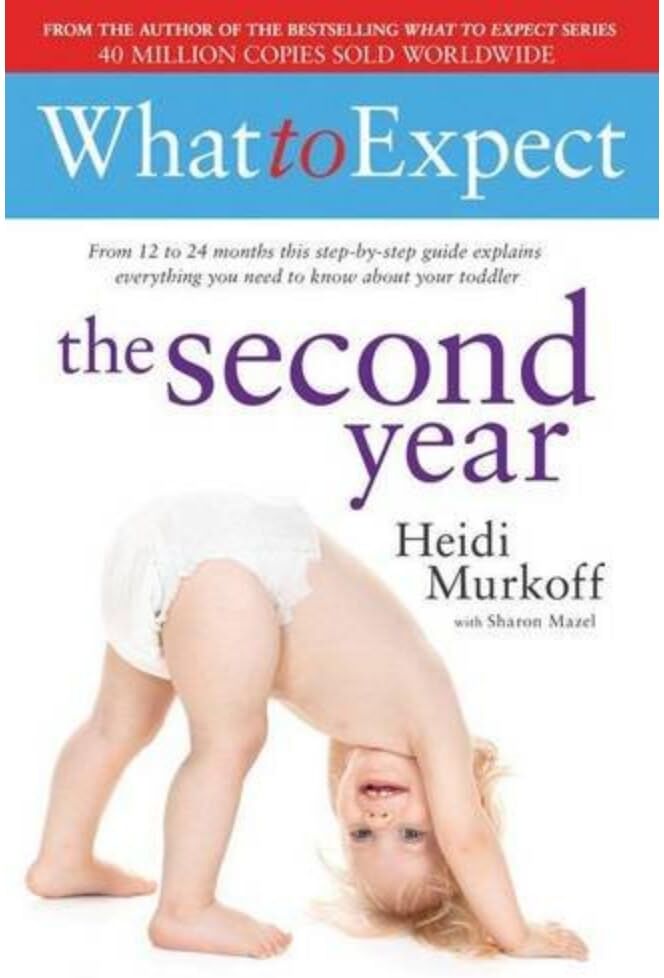
Simon & Schuster What to Expect: The Second YearThe international super-successful What to Expect brand has delivered again - announcing the arrival of a brand-new member of family: What to Expect the Second Year. This essential sequel to What to Expect the First Year picks up the action at baby's first birthday, and takes parents through what can only be called 'the wonder year' - 12 jam-packed (and jam-smeared) months of memorable milestones (from first steps to first words, first scribbles to first friends), lightning-speed learning, endless explorations driven by insatiable curiosity. Not to mention a year of challenges, both for toddlers and the parents who love them, but don't always love their behaviour (picky eating, negativity, separation anxiety, bedtime battles, biting, and tantrums). Comprehensive, reassuring, empathetic, realistic and practical, What to Expect the Second Yearis filled with solutions, strategies, and plenty of parental pep talks. It helps parents decode the fascinating, complicated, sometimes maddening, always adorable little person last year's baby has become. From the first birthday to the second, this must-have book covers everything parents need to know in an easy-to-access, topic-by-topic format, with chapters on growth, feeding, sleeping, behaviours of every conceivable kind, discipline (including teaching right from wrong), and keeping a toddler healthy and safe as he or she takes on the world. There's a developmental time line of the second year plus special 'milestone' boxes throughout that help parents keep track of their toddler's development. Thinking of travelling with tot in tow? There's a chapter for that, too.9,99 £*Shipping: 2,99 £Secure redirect to the provider
-
Is every turning point a saddle point?
No, not every turning point is a saddle point. A turning point is a point on a curve where the derivative is zero, indicating a local maximum, minimum, or point of inflection. A saddle point, on the other hand, is a point where the surface curves up in one direction and down in another, resembling the shape of a saddle. While a saddle point can be a turning point, not all turning points exhibit the characteristics of a saddle point. **
-
Is every saddle point a turning point?
No, not every saddle point is a turning point. A saddle point is a point on a surface where the surface curves up in one direction and curves down in another direction. This means that at a saddle point, the surface does not have a local maximum or minimum, so it is not considered a turning point. Turning points occur at local maximums or minimums, where the derivative of the function is zero. Therefore, while a saddle point is a critical point, it is not necessarily a turning point. **
-
What is the difference between a turning point and a saddle point?
A turning point is a point on a curve where the derivative changes sign, indicating a change in the direction of the curve. This can be a maximum or minimum point. A saddle point, on the other hand, is a point on a surface where the surface curves upwards in some directions and downwards in others, resembling the shape of a saddle. Saddle points are not necessarily extreme points like turning points, but they are critical points where the derivative is zero in all directions. **
-
What is the difference between a saddle point and a turning point?
A saddle point is a point on a curve where the curve changes direction but does not reach a maximum or minimum value. It is a point of inflection where the curve transitions from being concave upwards to concave downwards, or vice versa. On the other hand, a turning point is a point on a curve where the curve reaches a maximum or minimum value, indicating a change in the direction of the curve. Turning points are also known as local extrema. **
* All prices are inclusive of VAT and, if applicable, plus shipping costs. The offer information is based on the details provided by the respective shop and is updated through automated processes. Real-time updates do not occur, so deviations can occur in individual cases. ** Note: Parts of this content were created by AI.