Buy horseequipment.eu ?
We are moving the project
horseequipment.eu .
Are you interested in purchasing the domain
horseequipment.eu ?
domain@kv-gmbh.de · 0541-91531010
Buy horseequipment.eu ?
Are LEGO bricks made of thermoplastics or thermosetting plastics?
LEGO bricks are made of thermoplastics. Thermoplastics are a type of plastic that can be melted and reshaped multiple times through heating and cooling processes. This property allows LEGO bricks to be easily assembled and disassembled, making them versatile and reusable for building various structures. **
Why are there no polymerizations among the thermosetting plastics?
Thermosetting plastics do not undergo polymerization because they are already in a fully cured and cross-linked state. This means that the polymer chains are already interconnected and cannot undergo further polymerization. Once thermosetting plastics are molded and cured, they cannot be melted or reshaped like thermoplastics, making them more rigid and durable. This cross-linked structure also gives thermosetting plastics better resistance to heat and chemicals compared to thermoplastics. **


Similar search terms for Thermosetting
Top-Angebote
Products related to Thermosetting:
-
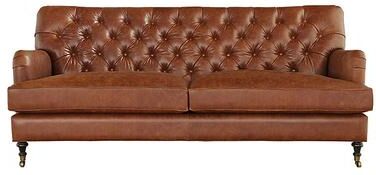
Maggie Leather Sofa - Saddle Leather, Saddle Walnut - Ballard DesignsTailored button tufts softened with cozy-up, tuck-your-toes-under comfort. Large enough to handle a crowd in stylish comfort, the Maggie Leather Sofa has a deep bench seat surrounded by a tightly tufted back and gently gathered English arms. The...4399,20 $*Shipping: 349,00 $Secure redirect to the provider
-
Juliana Leather Sofa - Saddle Leather, Saddle Sierra - Ballard DesignsJulianna Leather Sofa with Brass Nailheads Formal sophistication in a delightfully updated silhouette. Our Juliana Leather Sofa features a smooth bench seat and tight back framed in hand tacked brass nailhead trim. The bench made hardwood frame is...3679,20 $*Shipping: 349,00 $Secure redirect to the provider
-
Janelle Leather Sofa - Saddle Leather, Saddle Latte - Ballard DesignsOur Janelle Upholstered Collection offers deep seat, curl-up comfort in a classic rolled arm silhouette. The Janelle Leather Sofa’s bench made hardwood frame is deeply padded and expertly upholstered in buttery soft, top-grain leather gathered from...4319,20 $*Shipping: 349,00 $Secure redirect to the provider
-
Kerstin Leather Sofa - Saddle Leather, Saddle Walnut - Ballard DesignsOur Kerstin Collection offers sophisticated transitional lines softened with blissful, deep-seat comfort. The wrap-around backs and arms surround you in relaxing curves. The Leather Sofa features a clean-lined bench seat and two back cushions...3999,20 $*Shipping: 349,00 $Secure redirect to the provider


-
Are thermosetting plastics such as phenolic resins Pertinax and Bakelite toxic?
Thermosetting plastics such as phenolic resins, Pertinax, and Bakelite are generally considered to be non-toxic. These plastics are known for their heat resistance, durability, and electrical insulation properties, making them commonly used in various applications. However, like with any material, proper handling and disposal practices should be followed to prevent any potential environmental or health risks. **
-
How exactly does compression molding work, can thermosetting plastics become liquid?
Compression molding is a manufacturing process in which a heated and softened material, such as thermosetting plastics, is placed into a mold cavity. The material is then compressed under high pressure until it takes the shape of the mold. The pressure and heat applied help the material to flow and fill the mold, resulting in the desired shape and size of the final product. Thermosetting plastics can become soft and malleable when heated, but they do not become liquid like thermoplastic materials. Instead, they undergo a chemical reaction when heated, which causes them to harden and become rigid once cooled. This property makes thermosetting plastics ideal for compression molding, as they can be molded into complex shapes and retain their form once cooled. **
-
Do thermosetting plastics have monomers with more than 2 binding sites?
Yes, thermosetting plastics have monomers with more than 2 binding sites. These monomers have the ability to form cross-linked networks, which makes the resulting plastic material rigid and heat-resistant. The presence of multiple binding sites allows for the formation of strong covalent bonds between the monomers, leading to the irreversible cross-linking characteristic of thermosetting plastics. Examples of such monomers include formaldehyde, phenol, and urea. **
-
Are thermosetting plastics such as phenolic resins like Pertinax and Bakelite toxic?
Thermosetting plastics such as phenolic resins like Pertinax and Bakelite are generally considered to be non-toxic. These plastics are commonly used in food and beverage packaging, electrical insulation, and various other consumer products. However, it is important to note that the production and disposal of these plastics can release harmful chemicals and pollutants into the environment, which can have negative health effects. Therefore, it is important to handle and dispose of thermosetting plastics properly to minimize any potential environmental and health risks. **


Why does a thermosetting plastic (Duroplast) form after a polycondensation or polymerization?
A thermosetting plastic, such as Duroplast, forms after polycondensation or polymerization because of the cross-linking of polymer chains. During polycondensation or polymerization, the monomers undergo chemical reactions to form long chains of polymers. In the case of thermosetting plastics, these polymer chains are further cross-linked through additional chemical reactions, which create a three-dimensional network structure. This cross-linking makes the material rigid and infusible, giving it its characteristic properties of high heat resistance and dimensional stability. **
What are plastics? What are the differences between thermoplastics and thermosetting plastics?
Plastics are synthetic materials made from polymers, which are long chains of molecules. They are lightweight, durable, and can be molded into various shapes, making them ideal for a wide range of applications. The main difference between thermoplastics and thermosetting plastics lies in their response to heat. Thermoplastics can be melted and reshaped multiple times without undergoing any chemical change, while thermosetting plastics undergo a chemical reaction when heated and cannot be reshaped once they have been set. This means that thermoplastics are recyclable, while thermosetting plastics are not. **
Top-Angebote
Products related to Thermosetting:
-
Wrangler Western Saddle Stripe Ultra Soft Plush Fleece Bed BlanketAuthentically made with comfort at top of mind, the Wrangler Plush Blanket Collection is made with 100% premium polyester plush. Each blanket features self-hem detailing for a tailored look. Iconic Wrangler logo patch is featured at the bottom right.37,78 $*Shipping: 0,00 $Secure redirect to the provider
-
Cameron Leather Sofa - Saddle Leather, Saddle Flannel - Ballard DesignsModern lines with a relaxed, live-for-today attitude. The Cameron Leather Sofa’s sweeping curved arms and exposed tapered legs bring a fresh perspective to the classically proportioned silhouette. Bench made hardwood frame is richly padded and...4399,20 $*Shipping: 349,00 $Secure redirect to the provider
-
Maggie Leather Sofa - Saddle Leather, Saddle Walnut - Ballard DesignsTailored button tufts softened with cozy-up, tuck-your-toes-under comfort. Large enough to handle a crowd in stylish comfort, the Maggie Leather Sofa has a deep bench seat surrounded by a tightly tufted back and gently gathered English arms. The...4399,20 $*Shipping: 349,00 $Secure redirect to the provider
-
Juliana Leather Sofa - Saddle Leather, Saddle Sierra - Ballard DesignsJulianna Leather Sofa with Brass Nailheads Formal sophistication in a delightfully updated silhouette. Our Juliana Leather Sofa features a smooth bench seat and tight back framed in hand tacked brass nailhead trim. The bench made hardwood frame is...3679,20 $*Shipping: 349,00 $Secure redirect to the provider
-
Are LEGO bricks made of thermoplastics or thermosetting plastics?
LEGO bricks are made of thermoplastics. Thermoplastics are a type of plastic that can be melted and reshaped multiple times through heating and cooling processes. This property allows LEGO bricks to be easily assembled and disassembled, making them versatile and reusable for building various structures. **
-
Why are there no polymerizations among the thermosetting plastics?
Thermosetting plastics do not undergo polymerization because they are already in a fully cured and cross-linked state. This means that the polymer chains are already interconnected and cannot undergo further polymerization. Once thermosetting plastics are molded and cured, they cannot be melted or reshaped like thermoplastics, making them more rigid and durable. This cross-linked structure also gives thermosetting plastics better resistance to heat and chemicals compared to thermoplastics. **
-
Are thermosetting plastics such as phenolic resins Pertinax and Bakelite toxic?
Thermosetting plastics such as phenolic resins, Pertinax, and Bakelite are generally considered to be non-toxic. These plastics are known for their heat resistance, durability, and electrical insulation properties, making them commonly used in various applications. However, like with any material, proper handling and disposal practices should be followed to prevent any potential environmental or health risks. **
-
How exactly does compression molding work, can thermosetting plastics become liquid?
Compression molding is a manufacturing process in which a heated and softened material, such as thermosetting plastics, is placed into a mold cavity. The material is then compressed under high pressure until it takes the shape of the mold. The pressure and heat applied help the material to flow and fill the mold, resulting in the desired shape and size of the final product. Thermosetting plastics can become soft and malleable when heated, but they do not become liquid like thermoplastic materials. Instead, they undergo a chemical reaction when heated, which causes them to harden and become rigid once cooled. This property makes thermosetting plastics ideal for compression molding, as they can be molded into complex shapes and retain their form once cooled. **
Similar search terms for Thermosetting
-
Janelle Leather Sofa - Saddle Leather, Saddle Latte - Ballard DesignsOur Janelle Upholstered Collection offers deep seat, curl-up comfort in a classic rolled arm silhouette. The Janelle Leather Sofa’s bench made hardwood frame is deeply padded and expertly upholstered in buttery soft, top-grain leather gathered from...4319,20 $*Shipping: 349,00 $Secure redirect to the provider
-
Kerstin Leather Sofa - Saddle Leather, Saddle Walnut - Ballard DesignsOur Kerstin Collection offers sophisticated transitional lines softened with blissful, deep-seat comfort. The wrap-around backs and arms surround you in relaxing curves. The Leather Sofa features a clean-lined bench seat and two back cushions...3999,20 $*Shipping: 349,00 $Secure redirect to the provider
-
Wrangler Western Saddle Stripe Ultra Soft Plush Fleece Bed BlanketAuthentically made with comfort at top of mind, the Wrangler Plush Blanket Collection is made with 100% premium polyester plush. Each blanket features self-hem detailing for a tailored look. Iconic Wrangler logo patch is featured at the bottom right.46,49 $*Shipping: 0,00 $Secure redirect to the provider
-
Wrangler Western Saddle Stripe Ultra Soft Plush Fleece Bed BlanketAuthentically made with comfort at top of mind, the Wrangler Plush Blanket Collection is made with 100% premium polyester plush. Each blanket features self-hem detailing for a tailored look. Iconic Wrangler logo patch is featured at the bottom right.58,49 $*Shipping: 0,00 $Secure redirect to the provider
-
Do thermosetting plastics have monomers with more than 2 binding sites?
Yes, thermosetting plastics have monomers with more than 2 binding sites. These monomers have the ability to form cross-linked networks, which makes the resulting plastic material rigid and heat-resistant. The presence of multiple binding sites allows for the formation of strong covalent bonds between the monomers, leading to the irreversible cross-linking characteristic of thermosetting plastics. Examples of such monomers include formaldehyde, phenol, and urea. **
-
Are thermosetting plastics such as phenolic resins like Pertinax and Bakelite toxic?
Thermosetting plastics such as phenolic resins like Pertinax and Bakelite are generally considered to be non-toxic. These plastics are commonly used in food and beverage packaging, electrical insulation, and various other consumer products. However, it is important to note that the production and disposal of these plastics can release harmful chemicals and pollutants into the environment, which can have negative health effects. Therefore, it is important to handle and dispose of thermosetting plastics properly to minimize any potential environmental and health risks. **
-
Why does a thermosetting plastic (Duroplast) form after a polycondensation or polymerization?
A thermosetting plastic, such as Duroplast, forms after polycondensation or polymerization because of the cross-linking of polymer chains. During polycondensation or polymerization, the monomers undergo chemical reactions to form long chains of polymers. In the case of thermosetting plastics, these polymer chains are further cross-linked through additional chemical reactions, which create a three-dimensional network structure. This cross-linking makes the material rigid and infusible, giving it its characteristic properties of high heat resistance and dimensional stability. **
-
What are plastics? What are the differences between thermoplastics and thermosetting plastics?
Plastics are synthetic materials made from polymers, which are long chains of molecules. They are lightweight, durable, and can be molded into various shapes, making them ideal for a wide range of applications. The main difference between thermoplastics and thermosetting plastics lies in their response to heat. Thermoplastics can be melted and reshaped multiple times without undergoing any chemical change, while thermosetting plastics undergo a chemical reaction when heated and cannot be reshaped once they have been set. This means that thermoplastics are recyclable, while thermosetting plastics are not. **
* All prices are inclusive of VAT and, if applicable, plus shipping costs. The offer information is based on the details provided by the respective shop and is updated through automated processes. Real-time updates do not occur, so deviations can occur in individual cases. ** Note: Parts of this content were created by AI.